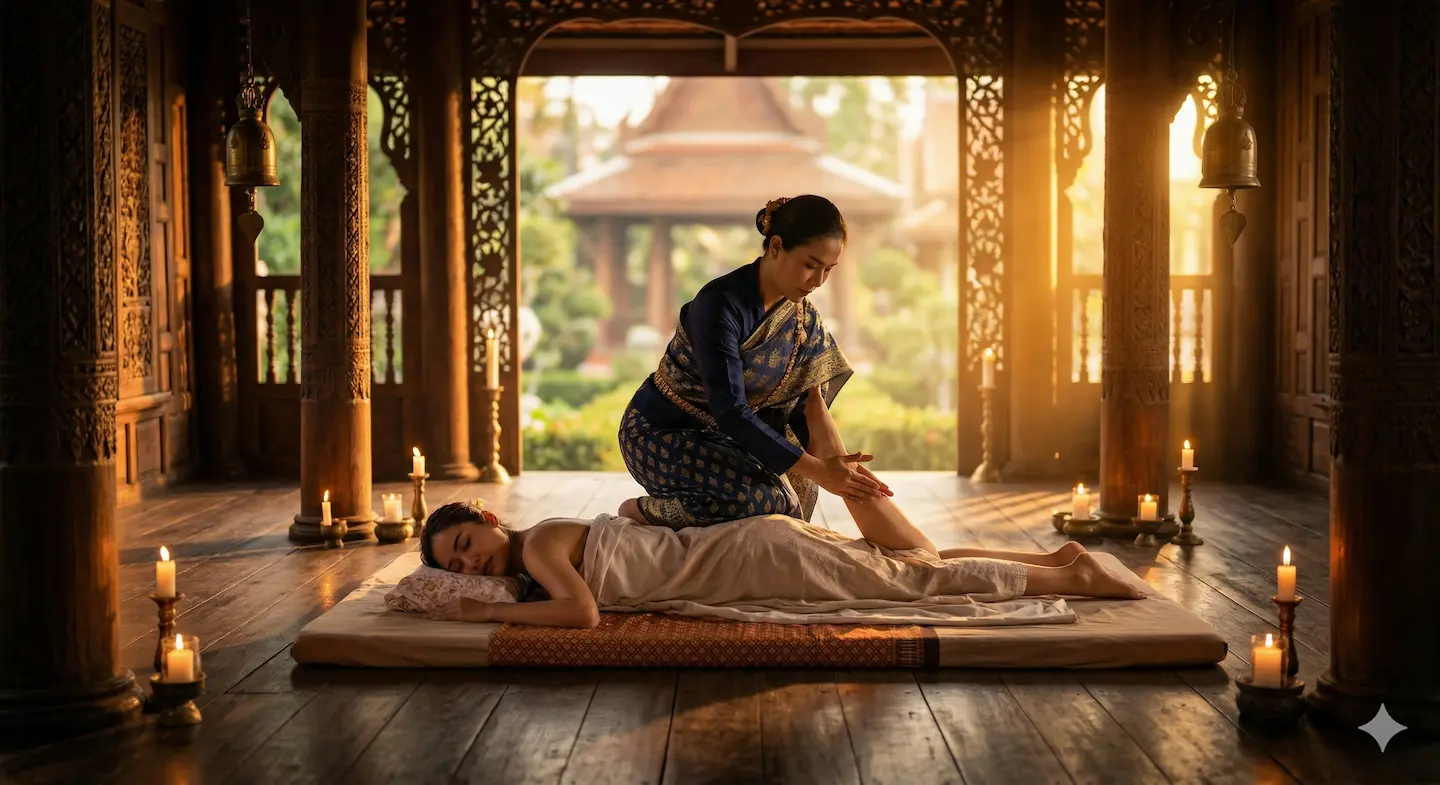
The story of traditional Thai massage — known as Nuad Boran (นวดโบราณ), meaning "ancient massage" — begins not in Thailand but in the court of the Magadha Kingdom in northern India, around 500 BCE. It was here that Shivago Komarpaj, a physician to the Buddha and the sangha, developed a system of therapeutic bodywork that would travel the Silk Road to become one of humanity's greatest healing traditions.
The Journey from India to Siam
As Buddhism spread across Southeast Asia between the 3rd and 7th centuries CE, it carried with it the medical knowledge of Ayurvedic healing. Monks trained as healers brought these techniques into Thai temples — the original hospitals and wellness centres of the ancient world. Wat Pho in Bangkok, established in the late 18th century, became the repository of this knowledge, with hundreds of massage diagrams carved directly into the temple walls.
"Thai massage is not merely bodywork — it is applied yoga, moving meditation, and therapeutic philosophy made physical."
The Four Elements of Traditional Thai Medicine
Traditional Thai healing is built on the concept of lom — the body's energy pathways, known as sen. There are 72,000 sen lines in the body, of which ten are primary. A skilled Thai massage practitioner works systematically along these lines, applying thumb pressure, palm compressions, and yoga-like stretching to unblock energy flow and restore constitutional balance.
The four elements of Thai medicine — earth, water, wind and fire — correspond to different constitutional types. Assessment of these elements informs the therapist's approach to each individual session, making traditional Thai massage a highly personalised therapeutic intervention rather than a standardised routine.
Royal Patronage and Systematic Preservation
King Rama III (1788–1851) commissioned the great preservation project of Wat Pho, inscribing the knowledge of Thai massage into 60 stone epigraphs and 80 human figures demonstrating massage postures. This made Wat Pho the first recorded "university" of therapeutic massage — a tradition that continues today in its internationally respected school.
In 2019, UNESCO inscribed traditional Thai massage — Nuad Thai — on its Representative List of the Intangible Cultural Heritage of Humanity. This recognition confirmed what practitioners had known for centuries: Nuad Boran is not merely a wellness treatment but a living cultural tradition of global significance.
Why Traditional Thai Massage Endures
- Works on the whole body — not merely symptomatic areas
- Combines acupressure, passive stretching and rhythmic rocking in a single continuous flow
- Performed fully clothed — no oils required, suitable for all preferences
- Addresses structural alignment alongside muscular tension and energetic balance
- Deeply energising as well as profoundly relaxing — unlike relaxation-only modalities
- Adaptable to clinical, wellness and preventive health contexts
Thai Massage in Modern Bangkok
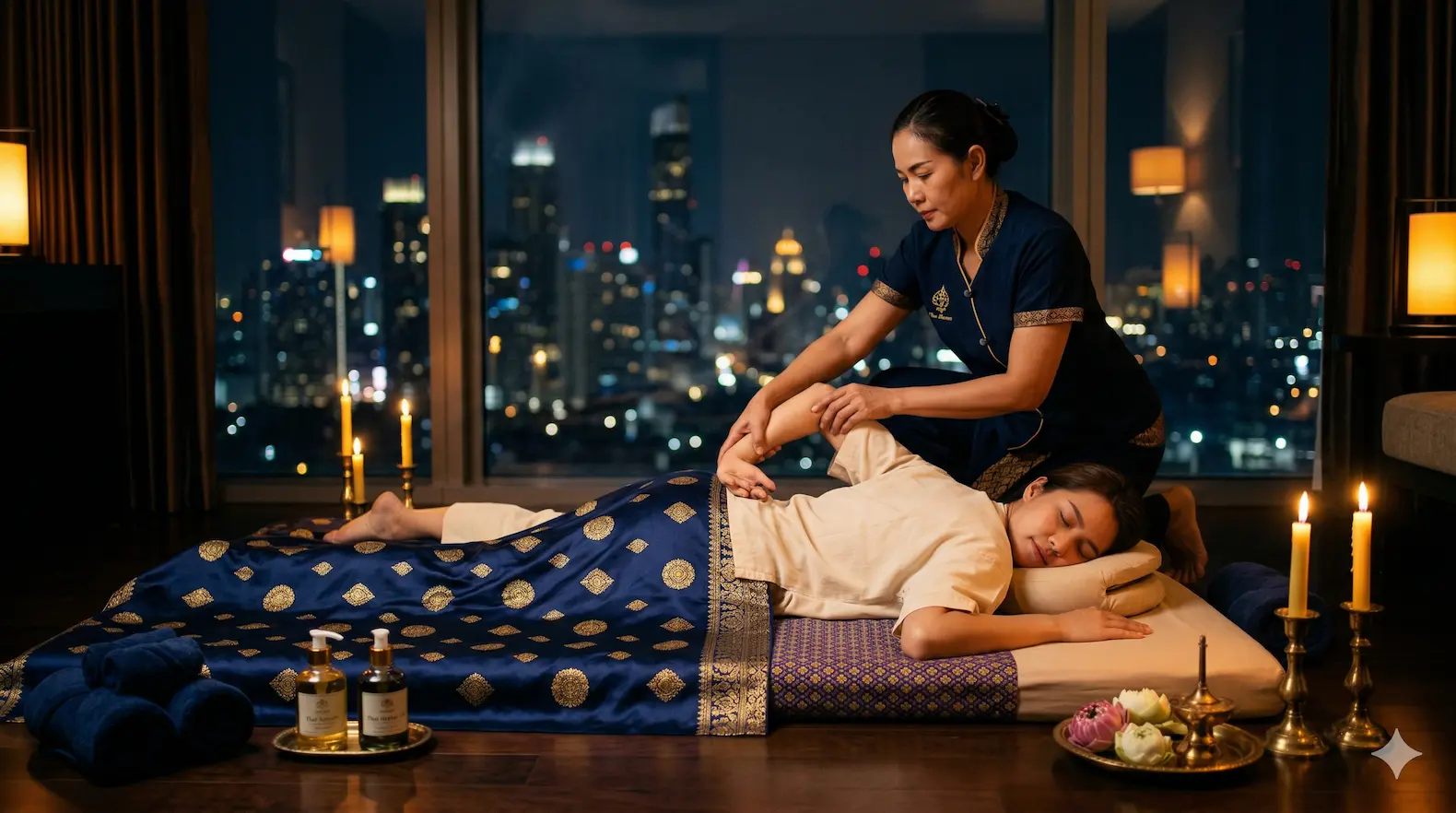
Today, Bangkok stands as the world capital of traditional Thai massage, with over 25,000 licensed practitioners and a government certification system administered by the Ministry of Public Health. The finest experience no longer requires visiting a temple clinic. Siam Aurum's certified therapists — many trained directly at Wat Pho — bring this ancient wisdom to your hotel suite or private residence across Sukhumvit, Silom, Sathorn and all Bangkok areas.
The session you experience today is the direct descendant of healing traditions refined across two and a half millennia — carrying the cumulative wisdom of every practitioner who came before.
Experience It Yourself
Book a certified Siam Aurum therapist delivered to your Bangkok hotel or residence. Confirmation in 15 minutes.
Book Now — From ฿900